Building fire resiliency within Asia’s industrial property
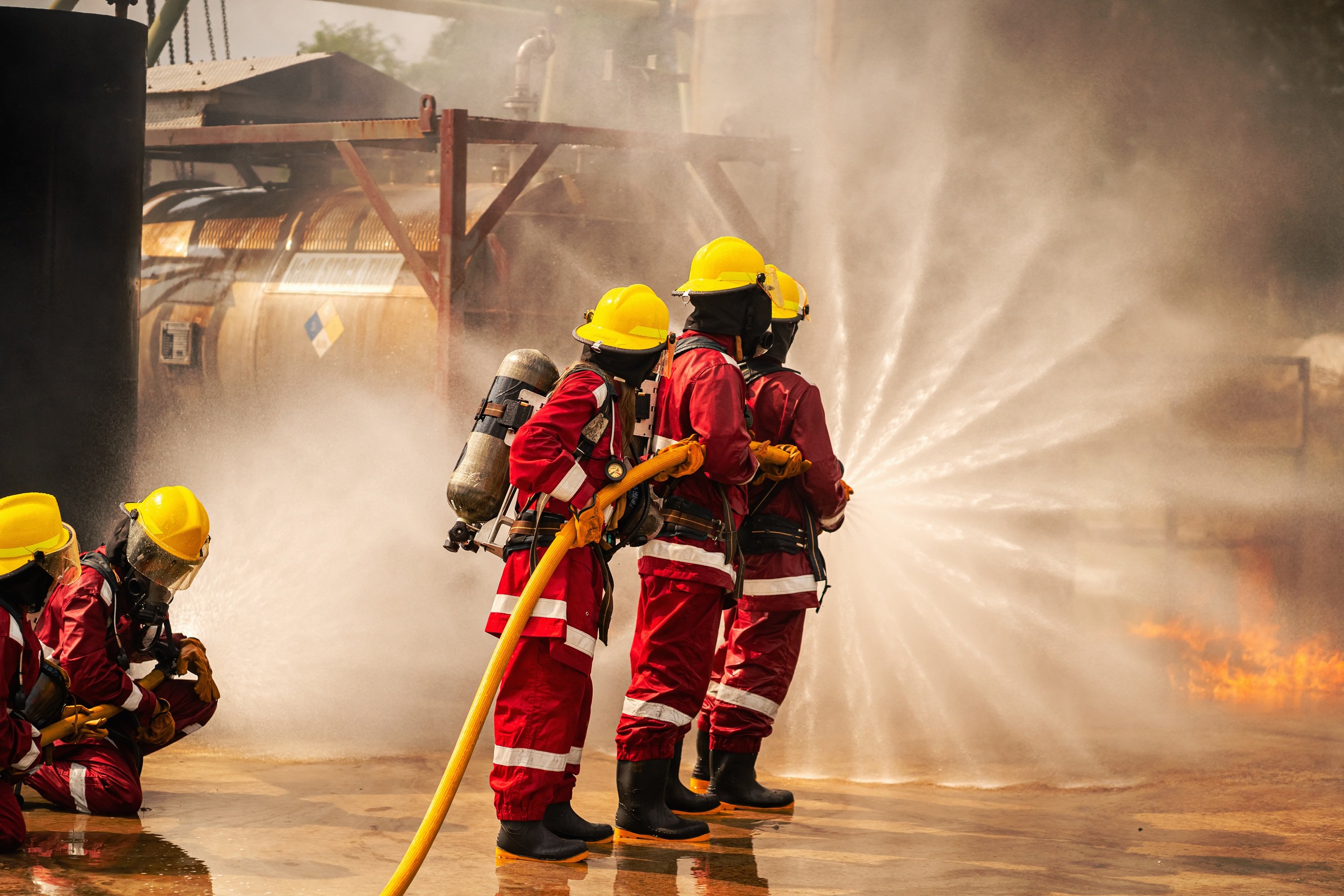
The past 12 months experienced a large number of high-profile fires, which severely impacted a multitude of property and industrial facilities across the region. Why do these events continue, especially in light of improving fire safety and crucially, what can be done to prevent them?
Throughout 2025, Asia experienced a large number of high-profile fires. In Japan for example, there was the “Oita Fire” that damaged over 170 buildings. In Jakarta, Indonesia, there was an epic blaze with 22 fatalities in an office block. In Hong Kong, there was the infamous apartment complex fire. And in South Korea, there was a 10-hour blaze at the National Information Resources Service (NIRS) headquarters in Daejeon, which wiped out the work documents of over 190,000 civil servants.
These fires happened during a time when fire safety is improving. Businesses around the region will spend over US$34 billion between now and 2030 on fire protection systems, including detectors, sprinklers, fire analysis, and incident response. Yet industrial property and facilities notably remain highly vulnerable. These include data centres, semiconductor manufacturing plants, petrochemical facilities, electricity substations, and warehousing. These are the very facilities that are driving Asia’s economy across digitalisation, electronics, energy and resources, and logistics.
Why do these fires continue and critically, what can be done to prevent them?
Technological issues
The causes of these fires vary enormously. Much is said about the vulnerability of lithium-ion batteries, which provide back-up power for such facilities. It is important to understand and manage the associated fire risks of lithium-ion batteries, particularly those linked to thermal runaway, poor charging practices, battery damage and storage conditions. They are but one of many technology-linked risks that facility operators should be concerned with. Machinery in manufacturing plants or energy facilities frequently falter and overheat, creating fires. Such facilities also store highly flammable materials like those found in petrochemical plants, where if not appropriately handled, these can ignite easily as well.
Automation in warehousing and factories also presents noteworthy fire risks. Robots that move goods from one place to another can experience electrical/electronic and mechanical failure and collide with other machines, equipment and goods, causing fires.
Industrial facilities typically need to be kept cool and maintained at a specific temperature. Some manufacturing facilities require huge amounts of cooling water, but what happens when there is a drought? Ordinarily, production should be halted, as was the case when Taiwan halted semiconductor production in 2021. However, in our own experience, there have been instances where production in various industries and markets carried on without adequate cooling or fire response systems having the required amount of water to work to standard.
Likewise, flooding caused by extreme rainfall and inundated premises can lead to electrical short circuits and equipment failure. These events can cause structural and mechanical damage, and can lead to hazardous chemical reactions when floodwater mixes with a wide range of stored chemicals.
Manpower and supplier challenges
Aging facilities are notably problematic. They can become weak and brittle over time, due to wear and tear. Plus, many may not adhere to the latest and most robust building codes (more on standards later). Some simply may not be equipped with fire prevention and response design, making them highly vulnerable.
Then there is human error and company oversight. These range from incorrect equipment assembly, to storing materials in unsafe locations, carrying out hot works in an unsafe manner, and even smoking or cooking in places where such activates are prohibited. Moreover, supply chain disruptions caused by tariffs and geopolitical tensions may force plant operators to purchase goods and supplies from new markets, where there may be the assumption that standards will remain the same from place to place. Yet often this isn’t the case. There is also the issue of differing regulations, which can be problematic for operators who are active in multiple jurisdictions, where it is assumed that standards are aligned, when in fact they aren’t.
There is also the temptation for builders and operators to ‘cut corners’, and purchase cheaper materials and equipment that is inadequate in terms of fire safety; or simply not install a required component or feature.
In light of the myriad of risks that can cause a fire, how should building and facilities managers respond?
A multi-layered approach
Owners and operators should first and foremost focus on fire prevention and risk management: look to disaster prevention, rather than disaster recovery. An important part of this process is to adhere to the highest of international standards and building codes. To this end, QBE is working with the International Finance Corporation, a member of the World Bank Group, on its Building Resilience Index (BRI), to share among the market resilience measures to mitigate applicable risks, and improve transparency for disclosing building resilience information between different stakeholders. Resilience isn’t just applicable to natural catastrophes — it is equally as applicable to human and machine errors as well.
When facilities are equipped with the best fire prevention measures, the likelihood of experiencing a fire is much lower. These measures should include conducting regular fire assessment risks and practice runs; enforcing strict housekeeping to ensure hazardous materials are stored safely and correctly; and ensure that all machinery and electronics are frequently inspected to identify potential faults.
In turn, operators should put in place fire detection and suppression systems. These should include smart smoke detectors, heat sensors, and for high-risk areas, very early smoke detection apparatus (VESDA) to alert personnel and trigger suppression systems instantly.
It goes without saying that fire detection and suppression systems should undergo continuous maintenance checks, to ensure that test fire pumps, sprinkler valves, and alarms are functional and safety code-compliant. Don’t ignore erroneous fault alarms on fire panels!
The role of insurers
With many a fire the result of human error and oversight, training and upskilling are critical for fire prevention and response. Plant operators should develop comprehensive emergency plans that outline evacuation routes, designate assembly points, and assign roles for emergency responders. Complimenting this, they must conduct regular fire drills, where all employees are trained in fire safety protocols and know how to operate fire extinguishers. Businesses should also leverage remote monitoring through sensors and real-time alert systems to provide round-the-clock visibility of potential fire risks.
Insurance companies play an important role in fire prevention and response. Not only do underwriters and risk engineers provide insights and guidance involving best practices and standards; they also identify and articulate weaknesses in their fire defences, as well as issues that may hamper the ability of facility operators to fight a fire when one breaks out.
Supporting these insights, there are multiple insurance policies that protect plant operators from the financial fall out that typically accompanies a fire. These include:
Construction All Risks (CAR), covering physical loss or damage from fire, lightning, explosion, and risks during construction.
Erection All Risks (EAR), protects machinery, plant, and structures from fire and other perils during the installation, testing, and commissioning phases.
Property/Fire policies, particularly Industrial All Risk (IAR), will cover buildings, contents and stock once the business is operational.
Business Interruption, compensates for lost revenue, increased operating costs, and ongoing expenses if a fire causes a halt in production or operations.
Operational machinery and equipment, covering damage to these assets caused by fire.
Bespoke SME solutions, where fire coverage is part of a bundle of policies designed to protect individual businesses from fire incidents.
At QBE, we’re upping our support for plant owners and operators. As part of our focus to make industries more resilient, as demonstrated through our support of the IFC’s BRI, we reward businesses that are striving to make their operations more resilient not only to fire and natural catastrophe risks, but also the wide range of other threats they are exposed to daily, by extending to them more favourable insurance coverage.