Use of Consumer Protection Statutes to Subvert Defamation First Amendment Protections
This first appeared in The Communications Lawyer Volume 41, Number 1, Winter 2026 which is published by the American Bar Association's Forum on Communications Law.
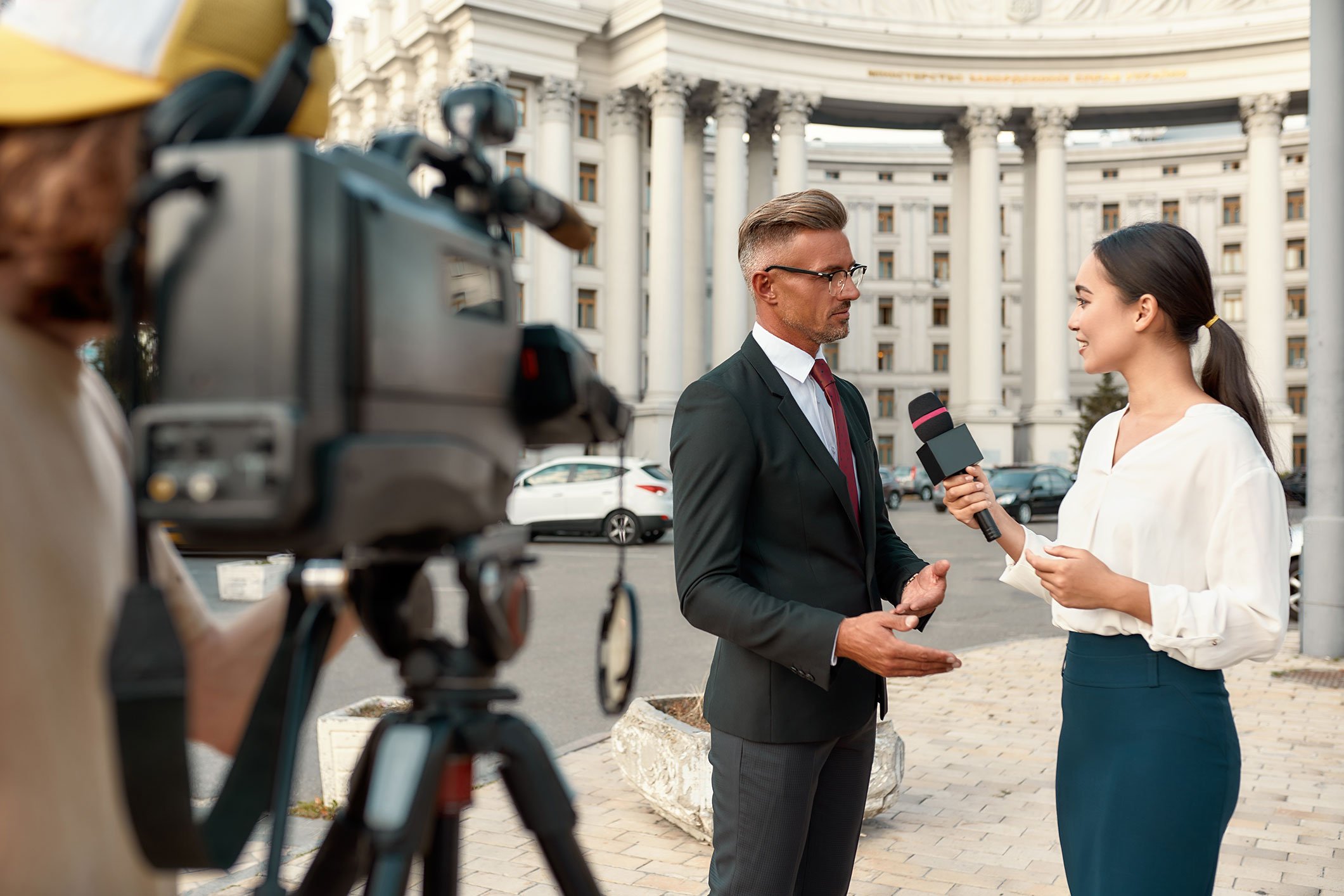
The overwhelming importance of the First Amendment has ensured that laws governing speech have many built-in defenses and procedural protections. For instance, defamation claims can require proof of actual malice, be subject to key defenses such as the fair report privilege, or be evalulated and struck down swiftly with an anti-SLAPP (strategic lawsuits against public participation) motion, which requires an unsuccessful plaintiff to pay the defendant’s legal fees. A trend has been brewing wherein plaintiffs seeking to challenge speech are citing consumer protection laws in an attempt to avoid those built-in defenses and procedural protections. We will explore this trend by reviewing a number of these proceedings and proposed consumer protection frameworks, including how defendants and courts have responded, and consider the future implications of this methodical shift.
Consumer Protection Statutes in Action
Texas Deceptive Trade Practices-Consumer Protection Act
In one of the most prominent such lawsuits, a plaintiff politician, together with a congressman, alleged a broadcast news network’s selective editing of interviews with his political rival that were broadcast ahead of an upcoming election harmed him financially, personally, and with respect to his election prospects.1 The plaintiffs alleged the defendants “deliberately edited out” “word salads that made no sense, unbelievably long and rambling answers the [sic] meandered to nowhere, [and] incoherent attempts at policy statements.”2 In addition, the plaintiffs asserted that the defendants removed “election changing answers to questions, and replaced them with completely different, and far better, answers, taken from another part of the interview.”3 Plaintiffs also complained that the defendants refused to release the unedited transcript and footage of the interview before the election.4
The plaintiffs alleged the defendants’ conduct amounted to false advertising and unfair competition under § 43(a) of the Lanham Act, 15 U.S.C. § 1125(a)(1)(B), which subjects to liability a person who “in commercial advertising or promotion, misrepresents the nature, characteristics, [or] qualities… of his or her… services, or commercial activities.”5 While plaintiffs veered from typical speech regulation theory by attempting to couch news reporting and editing as commercial speech, this legal theory is still subject to numerous traditional speech-based defenses, such as the First Amendment, and can also be susceptible to an anti-SLAPP motion.
Plaintiffs also pursued a wholly atypical tactic by alleging the defendants’ conduct violated the Texas Deceptive Trade Practices-Consumer Protection Act (DTPA), Tex. Bus. & Comm. Code § 17.46(a), which proscribes “[f]alse, misleading, or deceptive acts or practices in the conduct of any trade or commerce.”6 Plaintiffs preemptively asserted the appropriateness of the DTPA by noting that, as a consumer protection statute, it “shall be liberally construed and applied to promote its underlying purposes, which are to protect consumers against false, misleading, and deceptive business practices, unconscionable actions, and breaches of warranty.”7 Plaintiffs explained that the DTPA proscribes “[f]alse, misleading, or deceptive acts or practices in the conduct of any trade or commerce,”8 including causing confusion or misunderstanding as to the source of services and representing that services have sponsorship, approval, or characteristics which they do not have.9 Plaintiffs alleged that they are “consumers” under theDTPA because they each purchased or otherwise acquired defendants’ broadcast and digital media content services, directly or indirectly, and were harmed by relying on defendants’ “false and misleading advertisements and deceptively edited conduct.”10 Further, plaintiffs posited a construction of the DTPA to argue that the plaintiffs are not exempted from the DTPA.11
Plaintiffs maneuvered their allegations of the defendants’ purported conduct to fit the assertions into the DTPA framework. Plaintiffs suggested the defendants bear DTPA liability for engaging in “false, misleading, and deceptive commercial acts directed at Plaintiffs and other consumers.” Plaintiffs specified that defendants broadcast and posted on their websites conflicting versions of the interview segments, “confusing Plaintiffs and other consumers,” tampered with the entirety of the interview and broadcast it ahead of the election, and refused to release an accurate transcript of the interview until required to do so by the Federal Communications Commission.12 Plaintiffs asserted the defendants intended to increase profits and viewership, harm media competitors and consumers, and aid plaintiff’s rival by portraying her as intelligent, well-informed, and confident.”13 In addition, plaintiffs allege the defendants’ misconduct caused confusion or misunderstanding as to what was actually said in the interviews and sought to interfere in the election “through broadcast distortion for commercial and pecuniary gain.”14
Plaintiffs alleged damages of at least $10 billion, contending that the defendants’ conduct harmed plaintiffs’ business interests and also required diversion of his attention and resources while campaigning.15 Plaintiffs also sought an order enjoining defendants from continuing to post the subject interview and other “deceptively tampered content,” including requiring defendants to take all necessary corrective action.”16
The defendants moved for dismissal for failure to state a claim,17 arguing that the firepower of the First Amendment is an impediment to plaintiffs’ efforts “to punish a news organization for constitutionally protected editorial judgments they do not like.”18 Defendants argued that claims under the Lanham Act and DTPA “were designed to regulate commercial business practices, not to police editorial decisions made by news organizations.”19 Defendants also contend a DTPA claim cannot proceed, as plaintiffs failed to allege “any actual purchase or transaction involving defendants’ services.”20 In addition, defendants contended that pursuant to the First Amendment, the DTPA does not apply to editorial speech, which enjoys maximum First Amendment protection, especially with respect to an election.21 Defendants noted that “Texas courts have uniformly found that the DTPA does not purport to regulate non-commercial speech and especially not the editorial judgments of news organizations.”22 Defendants argued the interviews broadcast do not qualify as commercial speech, as they do not propose any commercial transaction, and “that economic motivation does not transform their editorial speech into commercial speech and divest it of its First Amendment protections.”23 Defendants also refuted the plaintiffs’ standing on the grounds that they cannot claim to have suffered any consumer injury from the broadcasts.24
Plaintiffs opposed the motion to dismiss, contending, among other things, that it would be premature for the court to assess whether the subject speech is commercial until plaintiffs have an opportunity to conduct discovery, “which can shed light on whether the [interview’s] distortion was the result of purely commercial considerations or whether it was, in fact, the result of editorial discretion.”25 In further support of their contention that the subject speech was commercial speech and not entitled to First Amendment protection, plaintiffs contended that in order “[f]or commercial speech to come within” the ambit of First Amendment Protection, as a threshold matter, “it at least must concern lawful activity and not be misleading.”26
Unfortunately, we won’t learn the court’s view of the allegations because in July 2025, the case was settled, and the court denied the motion as moot.
Iowa Consumer Fraud Act
In another lawsuit, the plaintiff politician framed his objections to news reporting on electoral poll results and the creation of the poll as fitting into the prohibitions of the Iowa Consumer Fraud Act (ICFA), Iowa Code Chapter 714H, including § 714H.3(1) and related provisions.27 The plaintiff politician alleged that three days ahead of the presidential election, the newspaper defendants published a poll conducted by the defendant seasoned pollster showing the plaintiff’s political rival winning Iowa by three points.28 The plaintiff alleged the poll was “false and manipulated”29 “to paint an incorrect and cynical picture of the downward trajectory” for the plaintiff “in the face of a supposedly turbocharged” campaign by his rival.30 Plaintiff contends the published three-point lead for his rival is belied by his Iowa win exceeding 13 points31 and contradicted by the other mainstream Iowa polls that showed the plaintiff comfortably ahead.32
The defendant pollster conducted and oversaw polls for the news publication from 1987 to 2024 and had an excellent track record. However, plaintiff contends the pollster “has quietly used her polls to try and influence recent races in favor of Democrats,”33 and the subject poll was “one of three massive ‘misses’ favoring Democrats” in the 2024 election cycle.34 Plaintiff contends the alleged conduct fits into the framework of the ICFA because the poll “was deceptive and misleading and involved concealment, suppression, and omission of material facts. Defendants engaged in this misconduct to improperly influence the outcome of the 2024 Presidential Election.”35
The ICFA proscribes conduct a person “knows or reasonably should know is an unfair practice, deception, fraud, false pretense, or false promise, or the misrepresentation, concealment, suppression, or omission of a material fact” with intent that others rely on such conduct “in connection with the advertisement, sale, or lease of consumer merchandise.…”36 The Consumer Fraud Act and relevant Iowa Code provisions define a consumer as “a natural person or the person’s legal representative”; deception as “an act or practice that is likely to mislead a substantial number of consumers as to a material fact or facts”; merchandise as “any objects, wares, goods, commodities, intangibles, securities, bonds, debentures, stocks, real estate or services”; and unfair practice as “an act or practice which causes substantial, unavoidable injury to consumers that is not outweighed by any consumer or competitive benefits which the practice produces.”37
Plaintiff argues that “unfair practice” can be found if “the defendant made a misrepresentation or omitted a material fact ‘with the intent that others rely upon the…omission.’”38 Plaintiffs contend the defendants fit the prong of furnishing “merchandise” to consumers because they provided a service in the form of physical newspapers, online newspapers, and other content that contained the poll.39 Plaintiffs argue the defendants’ conduct was deceptive because the poll was “‘likely to mislead a substantial number of consumers as to a material fact or facts,’ to wit: the actual position of the respective candidates in the Iowa Presidential race.”40
As for harm, plaintiff contends publication of the poll injured consumers because they were “badly deceived and misled as to the actual position of the respective candidates” in the race.41 Plaintiff suggests that he “sustained actual damages due to the need to expend extensive time and resources, including direct federal campaign expenditures, to mitigate and counteract the harms of the Defendants’ conduct.”42 Specifically, the plaintiff, his campaign, and “other Republicans were forced to divert enormous campaign and financial resources to Iowa.”43 He also argued harm was sustained by consumers who subscribed to the news publication, as well as Iowans who contributed to the plaintiff’s campaign.44 Plaintiff argues the statute also entitles him to statutory damages three times the actual damages suffered.45
Plaintiff shares his motivation for bringing the lawsuit as “necessary to deter Defendants and their fellow radicals from continuing to act with corrupt intent in releasing polls manufactured for the purpose of skewing election results in favor of Democrats.”46 In line with that goal, he seeks “injunctive relief, including an order enjoining Defendants and their associates from publishing or releasing any further deceptive polls designed to influence the outcome of an election and requiring defendants to disclose all data and information upon which they relied in creating, publishing, and releasing” the poll.47
The lawsuit has weaved a circuitous path. It was removed from state court to federal court, where various motions and revised pleadings were filed, fraudulent and negligent misrepresentation claims were added, plaintiffs were added, and the factual realm was expanded to include other Iowa polls that were purportedly manipulated to favor Democratic candidates.48 Plaintiff made multiple attempts to remand the case back to state court and notably refiled his suit in Iowa one day before the new Iowa anti-SLAPP law was to take effect.49
Defendants’ motions to dismiss focus on how the plaintiff’s claims are contrary to the most basic First Amendment rights and must be viewed under a strict scrutiny standard, as well as how the ICFA is not applicable to protected speech nor triggered by the facts of this matter. Defendants argue the ICFA cannot be misused to generate a new exception to the First Amendment because “political campaign reporting is at the zenith of First Amendment protection.”50 Defendants argue that even if the ICFA applied here, it would fail a strict scrutiny analysis as “the claims serve no compelling government interest.”51 Defendants further offer that “no court has held the government has any interest in policing” allegedly false campaign speech to prevent it from misleading voters to influence election outcomes,52 and the statute “cannot be conscripted by candidates for political office to target press campaign coverage based on faux election-interference claims.”53 In addition, the plaintiff’s interpretation of the statute is not narrowly tailored to achieve the purported goal, and less restrictive means are available, such as counterargument.54
Defendants contend plaintiff’s claims do not fall within the Iowa Consumer Fraud Statute because the “claims have nothing whatsoever to do with a consumer transaction; rather, they are expressly about purported “election interference.’”55 Defendants argue the speech at issue does not involve statements of fact, but instead amounts to non-actionable opinions,56 “snapshots in time of randomized samples” that do not guarantee57 and notably “did not motivate or inform any alleged consumer purchase of merchandise” by the plaintiff.58 Defendants explain how publication of the poll results is protected speech activity rather than an inherently commercial act and is not an “unfair act or practice” under the statute.59 In addition, defendants allege the ICFA does not apply because publication of the poll results was not an act in connection with the sale or advertisement of the merchandise.60 To the contrary, plaintiff claims “the allegedly violative conduct was politically—not commercially—motivated.”61
Plaintiff has continued to double down on his assertions, contending that he is a private party, this does not involve government suppression of political speech, strict scrutiny need not be applied, and defendants’ acts were “profit-driven.”62 He insists the polls were commercial speech, were not news events, but were “for-profit products that were paid for” by the news organization defendants and created by the pollster “in exchange for payment.”63 While the federal trial court did not permit remand to the state court, the Eighth Circuit Court of Appeals granted the plaintiff’s writ of mandamus and directed the district judge to treat the case as dismissed and to allow for the refiling in the Iowa state court.64 The Iowa state court looks poised to be the one to review the arguments with respect to the applicability of this consumer protection statute.
The ICFA was cited in a separate copycat65 lawsuit filed by a subscriber of the same newspaper defendants and the pollster as a purported class action.66 The subscriber alleged that the poll was “fake news” and defrauded subscribers,67 and that the poll’s factual errors “were made with knowledge that they presented a false description of the state of the electorate.”68 The subscriber framed his claims as ones for fraudulent misrepresentation, or in the alternative, reckless negligent misrepresentation; consumer fraud under ICFA; professional malpractice; interference with the right to vote; and civil conspiracy.69
While not brought as a substitute for a defamation claim, the subscriber suit provided the Iowa federal court with the opportunity to review whether First Amendment defenses are available to ICFA claims seeking to penalize speech. The court granted the defendants’ motions to dismiss, holding that the speech at issue, “political speech made by a newspaper covering a political campaign,” is protected by the First Amendment70 and subject to an actual malice standard.71 The court found the subscriber did not adequately plead actual malice. With respect to the ICFA claims, the court held that “publishing the results of a political opinion poll that matches the co-published methodology is not an unfair or deceptive practice,” but even if the plaintiff did make out a prima facia claim for ICFA violation, “such a claim would face significant resistance from the First Amendment.”72 The court stopped short of a conclusive direction, noting it “does not further address the threat such a claim would pose to free expression and a free press as guaranteed by the First Amendment.”73 The subscriber has filed an appeal with the Eighth Circuit Court of Appeals.
Washington Consumer Protection Act
This new tactic of using consumer protection laws to pursue quasi-defamation claims is not just being used by politicians. In fact, they may have drawn inspiration from a lawsuit filed by a nonprofit organization in 2020 against a prominent cable news station in an attempt to combat misinformation.74
In that case, the plaintiff was a local nonprofit that pushed for increased transparency and ethics in government.75 The plaintiff alleged that from February through April 2020, the news station’s broadcasts misrepresented the dangers of the Coronavirus in direct contradiction of the formal position of the then-current presidential administration, Washington’s governor, and public health experts.76 The Complaint points to statements made by the station’s hosts and personalities that had no factual support, including that the Coronavirus was an invention of the political left to “bring down the President”; the flu was far more deadly; the Coronavirus was milder than initially thought; no one should be afraid of it; the virus could at worst be compared to the flu; the “facts are actually pretty reassuring”; “the left wing media” was “playing up fears of the Coronavirus”; it is a “hoax” and “scam”; “[i]t is very difficult to contract this virus”; and it was “the safest time to fly.”77 The Complaint alleged that the station’s actions misrepresented the dangers of the Coronavirus and thereby sowed significant public confusion about the threat of the disease. The plaintiffs claimed these representations constituted deceptive acts or practices under the Washington Consumer Protection Act (the “Washington CPA”) because they caused consumers to fail to take appropriate action to protect themselves and others from the disease or to mitigate its spread, which contributed to a public health crisis and subsequent statewide shutdown, causing ongoing injury to people, damage to businesses, the loss of employment, and the closure of schools in Washington state.78 The requested relief included an order enjoining the cable news station to cease and desist televising misinformation regarding the Coronavirus and an order directing the station to issue specific retractions of each and every false and/or misleading statement broadcast relating to the Coronavirus.79
Unsurprisingly, the trial court granted the cable news station’s motion to dismiss upon finding that the plaintiff nonprofit organization’s claim ran afoul of the First Amendment.80 It determined that the challenged speech involved core political speech on matters of public concern.81 The Washington Court of Appeals agreed, rejecting both of the nonprofit’s arguments that (1) because the station provided its programming through third-party cable providers, it has no First Amendment rights independent of those cable providers, and (2) false statements relating to a global pandemic are not protected speech.82 Like the lower court, it found the challenged statements clearly implicated matters of public concern and thus received special First Amendment protections, “no matter how outrageous the statements may be.”83 The appellate court determined that none of the limited exceptions to the First Amendment, which allow content-based restrictions on speech, applied to the false statements made by the news station. Of note, it explicitly rejected the nonprofit’s argument analogizing the case to the defamation exception that allows courts to award damages for false statements made with actual knowledge of falsity or a reckless disregard for their falsity, noting that the nonprofit “brought a claim under the CPA; it has not alleged defamation.”84 It seems the court would not allow the nonprofit organization to enjoy both the benefits of avoiding the defamation defenses by bringing the case under an inventive cause of action while also taking advantage of the defamation exception to the First Amendment’s protections.
State Attorneys General Investigations and Resulting Litigation
The creative use of consumer protection statutes as end-runs around defamation defenses has also extended beyond the litigation context. In November 2023, a large social media company filed suit against a progressive watchdog group for tortious interference with contract, business disparagement, and interference with prospective economic advantage arising out of the group’s reporting that major sponsors’ advertisements on the social media site were appearing next to pro-Nazi content.85 The social media company alleged the watchdog group engaged in a “smear campaign” against it by “knowingly and maliciously manufactur[ing] side-by-side images” through deliberate manipulation of the social media site’s algorithm in order to create the results it wanted.86
Just three days after the publication of the article at issue, a former senior aide to the president made a social media post implicitly calling on state attorneys general of his party to investigate the watchdog group’s reporting on the situation. Soon thereafter, the Texas and Missouri attorneys general served civil investigative demands (CIDs) on the watchdog group, launching investigations under the states’ consumer protection laws into the group’s alleged “potential fraudulent activity” and “potentially unlawful business practices.”87 The Texas attorney general’s press release referred to the watchdog group as a “radical anti-free speech organization,” while the Missouri attorney general said he was “fighting to ensure progressive tyrants masquerading as news outlets cannot manipulate the marketplace in order to wipe out free speech.”88
In response, in January 2024, the watchdog group and the article’s author filed an action in federal court in Washington, D.C., against the Texas attorney general, mainly asserting a Section 1983 claim for retaliation in violation of the First Amendment and requesting the court to enjoin enforcement of the CID.89 Then, in March 2024, the Missouri attorney general filed a petition in the Missouri state court to enforce his CID against the watchdog group, alleging an immediate enforcement action was needed because the watchdog group had already resisted the Texas CID.90 The watchdog group subsequently moved to add the Missouri attorney general to the action against the Texas attorney general, which the court granted.91 The federal court ultimately granted the plaintiff watchdog group’s motion for preliminary injunction and denied both defendant attorneys general’s motion to dismiss.92
As to the Texas attorney general, the court granted the watchdog group’s motion for a preliminary injunction, finding that it was likely to succeed in establishing jurisdiction and on the merits of its claim.93
It rejected the Texas attorney general’s argument that the watchdog group was foreclosed from seeking pre-enforcement review of the CID in federal court, finding that the plaintiff watchdog group presented ample evidence that their constitutional injury—the chilling effect on their First Amendment rights—was ongoing.94 The court also concluded that the group established their First Amendment retaliation claim by showing that (1) they engaged in conduct protected under the First Amendment, (2) the attorney general’s threat of invoking legal sanctions and administrative and judicial intrusion into newsgathering and editorial process constituted retaliatory action sufficient to deter a person of ordinary firmness from speaking again, and (3) the attorney general’s press release and description of the watchdog group demonstrated a causal link between the exercise of a constitutional right and the adverse action taken.95
Similarly, the federal district court rejected the Missouri attorney general’s arguments, starting with the claim that the court should abstain from ruling due to the pending Missouri state-court enforcement action.96 On the merits of the case, the court found that the watchdog group had likely shown its reporting was not defamatory and therefore was protected speech under New York Times v. Sullivan, thus satisfying the necessary first element of its First Amendment retaliation claim.97 It further held that the group demonstrated a likelihood of success on the element that the Missouri attorney general engaged in retaliatory action sufficient to deter a person of ordinary firmness from speaking again, given the attorney general’s announcement of an investigation and issuance of a CID demanding records, as well as the Missouri attorney general’s request to the state court to sanction the plaintiff watchdog group with a civil penalty.98 Finally, the court concluded that the watchdog group was likely to succeed in proving the final but-for causation element based on the following proof of retaliatory intent: the Missouri attorney general’s public statements, the likelihood that the premise of his investigation was a pretext for retaliation, and his unorthodox approach to enforcing the CID by immediately filing an enforcement action.99
The Missouri attorney general has now agreed to drop his investigation of the watchdog group upon admitting that his office had not uncovered any evidence that the group had violated Missouri law.100 On the other hand, the Texas attorney general appealed, but the U.S. Court of Appeals for the District of Columbia Circuit affirmed the lower court’s findings on appeal.101 In particular, the court observed that the watchdog group is “suffering from a campaign of retaliation against them in response to their exercise of their First Amendment rights.”102 Meanwhile, the social media company’s original case against the watchdog group, which sparked this saga, continues on. Most recently, the watchdog group lost its motion to transfer the venue out of Texas.103
However, this hydra of a case has yet another head. In May 2025, the Federal Trade Commission (FTC) issued a CID to the watchdog group to determine whether the group was “engaging in unfair, anticompetitive, collusive or exclusionary acts or practices… to withhold, degrade, increase the cost of, or otherwise diminish the quantity of advertising placed on news outlets, media platforms, or other publishers in violation of Section 1 of the Sherman Act.”104 Once again, the group was forced to file an action seeking preliminary injunctive relief in the D.C. federal court against the FTC to defend its First Amendment rights.105 And once again, the court found that the watchdog group was likely to succeed on its First Amendment retaliation claim, noting that “this case presents a straightforward First Amendment violation.”106
Practical Considerations
On a practical note, attorneys representing news organizations should be aware of the insurance implications of these new causes of action against the media so they can alert their clients to potential issues that may need to be discussed with brokers when placing media insurance. While standard media policies include defamation claims as a core coverage, not all policies will automatically cover these new consumer protection causes of action. In fact, most media liability insurance policies include language excluding coverage for claims arising out of alleged violations of consumer protection laws as well as alleged false, deceptive, or unfair business practices. However, recognizing that the intent of media liability insurance is to cover just this kind of strategic litigation, a few insurance carriers have created endorsements that expand coverage to include alleged false, deceptive, or unfair business practices or violation of consumer protection laws resulting from a media organization’s newsgathering or news reporting activities.107 If your client is susceptible to such claims, this coverage is likely worth exploring since it appears these consumer protection claims are here to stay.
Conclusion
As we have seen, even without the safeguards of the defamation defenses, these and other media outlets have thus far withstood all these broadsides thanks to the core protections of the First Amendment. Nonetheless, defamation plaintiffs continue to seek creative ways to subvert the First Amendment protections embedded within defamation statutes. For example, the Texas attorney general has also recently filed suit against a collegiate sports association arising out of speech concerning transgender athletes, in addition to an ongoing suit by the same attorney general against a prominent online review website for speech related to crisis pregnancy centers.108 In addition, following the enactment of Washington’s anti-SLAPP statute, a former police officer added a claim under the Washington CPA to his existing defamation action against a newspaper publisher based on the article’s statements that the officer was fired for “racial slur, sexual harassment, and talk of killing Black people.”109 Thus, it is clear that those who seek to suppress speech they disagree with will continue to push the boundaries of the First Amendment by using consumer protection laws to pursue legal action, and the media will need to navigate an increasingly complex legal environment.
This article is for general informational purposes only and is not legal advice and should not be construed as legal advice. The information in this article is descriptive only. Actual coverage is subject to the language of the policies as issued. Any views or opinions expressed herein are those of the author and do not necessarily reflect the view or opinions of QBE.
Endnotes
- See Am. Compl. and Demand for Jury Trial, Trump v. Paramount Global, 2:24-cv-00236-Z (N.D. Tex., Feb. 7, 2025), ECF No. 36.
- Id. at 28.
- Id. at 39.
- See id. at 9.
- See id. at 9–10.
- See id. at 10.
- Id. at 48.
- Id.
- See id.
- Id. at 49–50.
- See id.
- Id. at 53.
- Id. at 55.
- Id. at 55–56.
- Id. at 56.
- Id. at 57.
- Defendants also moved for dismissal based on lack of personal jurisdiction and improper venue, or in the alter-native, to transfer.
- See Def.’s Mem. Supp. Mot. Dismiss Pl.’ Am. Compl. for Lack of Subject-Matter Jurisdiction and Failure to State a Claim at 9, Trump v. Paramount Global, No. 2:24-cv-00236-Z (N.D. Tex., Feb. 7, 2025), ECF No. 52.
- Id. at 10.
- Id.
- See id. at 15–18.
- Id. at 19.
- See id. at 21–22.
- See id. at 22–25.
- Pl.’s Mem. Opp. to Def.’s Mot. Dismiss Pl.’s Am. Compl. for Lack of Subject-Matter Jurisdiction and Failure to State a Claim at 17, Trump v. Paramount Global, No. 2:24-cv-00236-Z (N.D. Tex., Feb. 7, 2025), ECF No. 62.
- Id. at 19.
- Petition, President Donald J. Trump v. J. Ann Selzer, Selzer & Co. (Iowa Dist. Court, Polk County Dec. 16, 2024).
- Id. at 1–2.
- Id. at 2.
- See id. at 10.
- See id. at 2.
- Id. at 11.
- See id. at 7.
- See id. at 19–20.
- Id. at 23.
- Id. at 21 (quoting Iowa Code § 714H.3(1)).
- Id. at 21 (quoting Iowa Code § 714H.2(3, 5 and 6)).
- Id. at 22–23.
- Id. at 22.
- Id.
- Id.
- Id. at 22–23.
- Id. at 22.
- Id. at 22–23.
- Id. at 23.
- Id. at 6.
- Id. at 24.
- See Revised Am. Compl., President Donald J. Trump v. J. Ann Selzer, No. 4:24-cv-00449-RGE-WPK (S.D. Iowa July 25, 2025), ECF No. 88-1.
- See Zoe Richards and Gary Grumbach, Trump drops federal lawsuit against Iowa pollster Ann Selzer, refiles in state court, NBC News (June 30, 2025, 6:00 PM), https://www.nbcnews.com/politics/donald-trump/trump-lawsuit-iowa-poll-ann-selzer-des-moines-register-kamala-harris-rcna216078.
- Brief in Support of Def.’s Des Moines Register and Tribune Co. and Gannett Co., Inc.’s Mot. Dismiss Revised Am. Compl. at 15, President Donald J. Trump v. J. Ann Selzer, No. 4:24-cv-00449-RGE-WPK (S.D. Iowa July 28, 2025), ECF No. 92-1.
- Id. at 18–19.
- Id.
- Id. at 20.
- See id. at 21.
- See id. at 24.
- Id. at 26.
- Id. at 26–27.
- Id. at 27.
- See id. at 31–32.
- See id. at 36.
- Id.
- See Pl.’s Mem. Opp to Def.’s Des Moines Register and Tribune Co. and Gannett Co.’s Mot. Dismiss the Revised Am. Compl. at 11–12, President Donald J. Trump v. J. Ann Selzer, No. 4:24-cv-00449-RGE-WPK (S.D. Iowa July 29, 2025), ECF 107.
- Id. at 13.
- See Brian Flood, Trump scores legal win, getting lawsuit against Iowa pollster, Des Moines Register moved to state court, Fox News (Oct. 24, 2025, 8:10 PM), https://www.foxnews.com/media/trump-scores-legal-win-he-gets-lawsuit-against-iowa-pollster-des-moines-register-moved-state-court.
- See Victory! Federal district court dismisses class-action suit against poll-ster J. Ann Selzer, FIRE (November 6, 2025), https://www.fire.org/news/victory-federal-district-court-dismisses-class-action-suit-against-pollster-j-ann-selzer.
- See First Am. Compl., Donnelly v. Des Moines Register and Tribune Co., 4:25-cv-00150-RGE-WPK (S.D. Iowa, June 2, 2025), ECF No. 22.
- See id. at 1–2.
- Id. at 21.
- See id.
- Donnelly v. Des Moines Register and Tribune Co., 4:25-cv-00150-RGE-WPK (S.D. Iowa, Nov. 6, 2025), ECF No. 48.
- Id.
- Id. at 15.
- Id. at 15–16.
- Wash. League for Increased Transparency & Ethics v. Fox News, 2021 WL 3910574 (Wash Ct. App. Aug. 30, 2021).
- First Am. Compl. at 2, Wash. League for Increased Transparency and Ethics v. Fox Corp., No. 20-2-07428-4 SEA (Super. Ct. of Wash. Cnty. of King, Apr. 15, 2020).
- Id. at 14–29.
- Id. at 14–28.
- Id. at 29, 31.
- Id. at 32.
- Wash. League, 2021 WL 3910574, at *1.
- Id.
- Id. at *2–3.
- Id. at *4.
- Id.
- Ted Johnson, Judge Halts Missouri AG’s Elon Musk-Triggered Investigation of Media Matters, Deadline (Aug. 26, 2024, 2:47 PM), https://deadline.com/2024/08/elon-musk-media-matters-missouri-attorney-general-1236050589/; Compl., X Corp. v. Media Matters for America, No. 4:23-cv-01175-O (N.D. Tex. Nov. 20, 2023); First Am. Compl. at 20–24, X Corp. v. Media Matters for America, No. 4:23-cv-01175-O (N.D. Tex. Feb. 27, 2024).
- First Am. Compl. at 3–4, X Corp.
- Johnson, supra note 76; Press Release, Ken Paxton Attorney General of Texas, Attorney Gen-eral Ken Paxton Opens Investigation into Media Matters for Potential Fraudulent Activity (Nov. 20, 2023), https://www.texasattorneygeneral.gov/news/releases/attorney-general-ken-paxton-opens-investigation-media-matters-potential-fraudulent-activity; Press Release, Missouri Attorney General, Attorney General Bailey Notifies Media Matters of Pending Investigation (Dec. 11, 2023), https://ago.mo.gov/attorney-general-bailey-notifies-media-matters-of-pending-investigation/.
- Press Release, Ken Paxton, supra note 78; Press Release, Missouri Attorney General, supra note 78.
- Media Matters for Am. v. Bailey, 2024 WL3924573, at *1 (D.D.C. Aug. 23, 2024).
- Id.; Ava Sasani, Missouri AG sues Media Matters as Republicans take on critics of Musk’s X, The Guardian (Mar. 30, 2024, 11:00 PM), https://www.theguardian.com/us-news/2024/mar/30/media-matters-lawsuit-missouri-elon-musk.
- Media Matters v. Bailey, 2024 WL3924573 at *1.
- Id.
- Id.
- Media Matters for Am. v. Paxton, 732 F. Supp. 3d 1, 24 (D.D.C. 2024).
- Id. at 27–29.
- Media Matters v. Bailey, 2024 WL3924573 at *7.
- Id. at *10.
- Id. at *11–12.
- Id. at *14–18.
- Wendy David, Missouri AG Drops Investigation of Media Matters, MediaPost (Feb. 14, 2025), https://www.mediapost.com/publications/article/403428/missouri-ag-drops-investigation-of-media-matters.html
- Media Matters for Am. v. Paxton, 138 F.4th 563 (D.C. Cir. 2025).
- Id.
- X Corp. v. Media Matters for Am., No. 4:23-CV-01175-O, at 1 (N.D. Tex. Sept. 16, 2025) (order denying motion to transfer venue).
- Media Matters for Am. v. Fed. Trade Comm’n, No. CV 25-1959 (SLS), 2025 WL 2378009, at *6 (D.D.C. Aug. 15, 2025).
- Id. at *1.
- Id. at *1–2.
- E.g., QBE North America’s “Media Claims Made Amendatory with Consumer SLAPP Carveback Endorse-ment” or Mutual’s “Alternative Claim Coverage Enhancement Endorsement.”
- Press Release, Ken Paxton Attorney General of Texas, Attorney General Ken Paxton Sues NCAA To Pro-tect Women’s Sports and Prevent Biological Men from Deceptively Competing in Sex-Specific Competitions (Dec. 22, 2024), https://www.texasattorneygeneral.gov/news/releases/attorney-general-ken-paxton-sues-ncaa-protect-womens-sports-and-prevent-biological-men-deceptively; State v. National Collegiate Athletic Association, No. DC-2024-CV-1835 (D.C. Lubbock County, Tex. June 6, 2025); State v. Yelp, Inc., No. 15-24-00040-CV, 2025 WL 2936466 (Tex. App. Oct. 16, 2025).
- Thurman v. Cowles Co., 4 Wash. 3d 291, 293–94 (2025).
This article first appeared in Communications Lawyer, Volume 41, Number 1, starting on page 38. © 2026 by the American Bar Association. The Communications Lawyer, The Journal of Media, Information, and Communications Law, is a Publication of the Forum on Communications Law of the American Bar Association. Reproduced with permission. All rights reserved. This information or any portion thereof may not be copied or disseminated in any form or by any means or stored in an electronic database or retrieval system without the express written consent of the American Bar Association or the copyright holder.