
Cyber resilience now depends on managing business dependencies. Organisations have become heavily dependent on interconnected digital ecosystems, cloud infrastructure and software providers that are essential but often sit outside their direct control.
Three key takeaways



Disruptive cyber incidents are rising
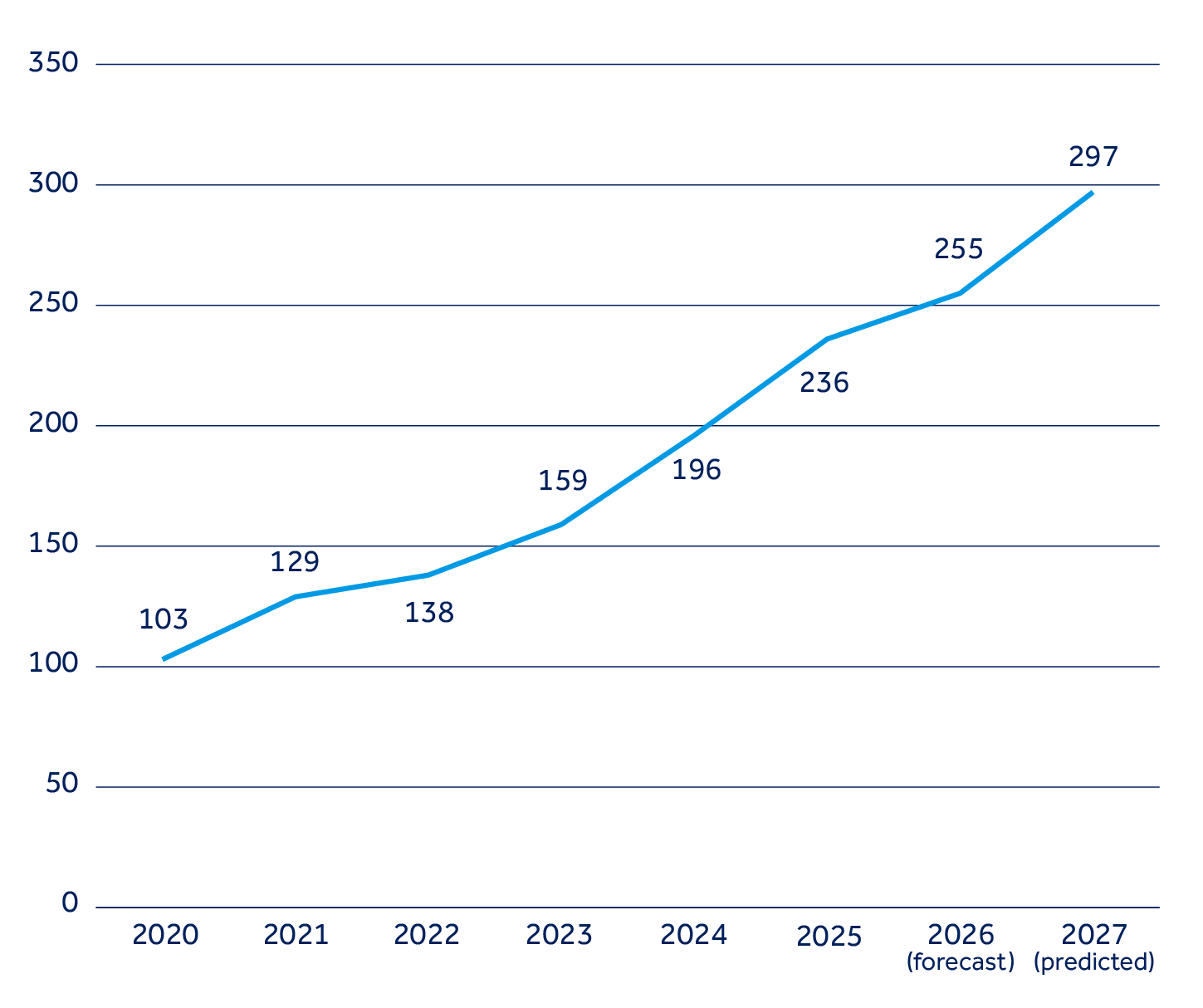
Across the 14 QBE markets examined, disruptive incidents have risen every year since 2023 and are forecast to rise again by the end of 2026 and in 2027.1
What the report found has changed is not only the volume but the average impact of successful attacks: where incidents typically caused a few days of disruption three years ago, disruption today is more likely to be prolonged because far more of the business depends on the systems that are affected.
Ransomware and data leak extortion remain a significant threat
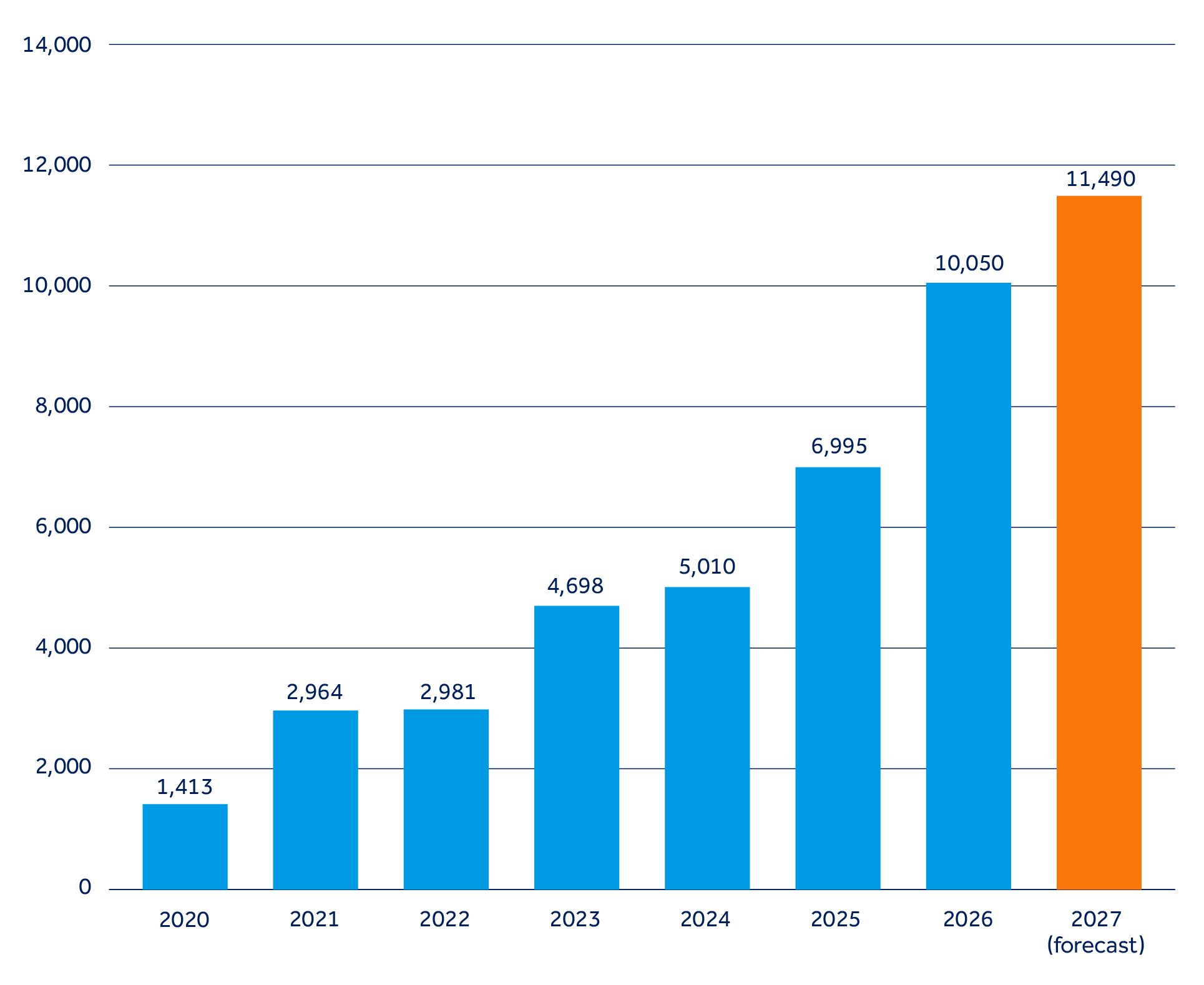
The report notes that, across the 14 QBE markets examined, ransomware and data leak extortion remain among the most financially costly and potentially disruptive cyber threats facing organisations.
The number of victim organisations named on ransomware data leak sites increased by 611% between 2020 and 2026 (at the time of writing) and is forecast to increase by a further 14% in 2027.2
When incidents become crises
The security failings that can cause disruptive events are consistent across Control Risks’ intelligence database of open source and response cases.3 Many of these failings are reported as being exacerbated by expanding attack surfaces and increasing threat actor capabilities, including those enabled by AI.4
Five recurring weaknesses can turn incidents into crises

Identity, access and people
Absent or by-passable MFA, credential reuse and over-privileged accounts can all expand potential attack surfaces.

Unpatched and legacy systems
Most vulnerabilities reportedly exploited in 2025 were known issues for which fixes already existed.

Poor segmentation
Flat IT or OT networks can enable attackers to move from a corporate foothold straight into operational systems, or across critical IT systems in an organisation.

Third-party exposure
Suppliers, MSPs and software platforms are a significant initial access route, with threat actors even targeting suppliers’ third-parties to gain access to highly attractive target environments.

Detection and response gaps
Limited monitoring of anomalous events and/or the ability to quickly block incidents, and business continuity and response plans that are untested or not mapped to the organisation’s critical services.
Explore the full report
Discover how dependency, concentration and control failures can turn cyber incidents into prolonged operational disruption.
Download the full report and local underwriter insight for your region






QBE produced this report with Control Risks. Control Risks is a global risk and strategic consulting firm specialising in geopolitical, security, technical, and integrity risk analysis and assessments. The findings and statements on this page are limited to the scope of the report and do not represent all global incidents. Please download the report for more information.
Markets in scope (14): The analysis covers 14 markets in which QBE operates: the UK, Sweden, Denmark, France, Germany, Spain, Italy, the Netherlands, Canada, the US, Australia, New Zealand, Singapore and Hong Kong. Data is sourced from the period 2023-26, with a forward look to 2027.
Sources and method: The analysis draws on Control Risks’ incident, intelligence and response data across the 14 markets in scope, supplemented by open-source reporting and third-party market data where cited. Figures for 2026 take the year-to-date numbers and then forecast to year close; 2027 figures are forecast based on average growth.
For more information on the data methodology, please see p. 22 of the report.
1 The aggregate number across the 14 markets, refer to full report p. 22 for regions, data methodology and limitations. These figures do not represent all global incidents and forecasts are estimates only as described in the main report.
2 Control Risks’ incident and intelligence data. Refer to full report p. 22 regions, data methodology and limitations. These figures do not represent all global incidents and forecasts are estimates only as described in the main report.
3 Control Risks’ incident and intelligence data. Refer to full report p. 22 regions, data methodology and limitations. These figures do not represent all global incidents and forecasts are estimates only as described in the main report.
4 Control Risks’ incident and intelligence data. Refer to full report p. 22 regions, data methodology and limitations. These figures do not represent all global incidents and forecasts are estimates only as described in the main report.
All products and services are provided by QBE Insurance Group Limited or its subsidiaries (“QBE”) or by QBE’s selected third party vendors and may be subject to additional terms and conditions, limitations and disclaimers [available on request]. Information and guidance provided by QBE is not intended to constitute any financial or professional advice tailored to your circumstances and may not have been prepared with detailed knowledge of your systems or the risks to your business, and does not cover all possible situations or actions necessary to respond to a cyber security incident. QBE does not make any guarantees regarding outcomes, such as reduced claim exposure or that a product or service will meet your unique needs. You are responsible for using your independent judgment to assess the advice provided and the suitability of any product and this does not replace the advice of legal counsel or cyber security professionals in preparing for, or responding to, a cyber security incident. QBE is not liable or responsible for services provided by its third party vendors. QBE and the chain links logo are registered trade marks of QBE Insurance Group Limited and third party marks are duly licensed. © 2026 QBE Insurance Group Limited.