Climate resilience local grants recipients for 2025

Each year community organisations based in Australia supporting programs across Australia, New Zealand and the Pacific are invited to apply for $50,000 grants, so that they can achieve the goals at the heart of their purpose. It’s just one of the ways we’re working to help create strong, resilient and inclusive communities.
In 2025, $600,000 was awarded to 12 community organisations across three categories: climate resilience, inclusion, and employee choice – supporting causes that are most important to our people.
Four community organisations focused on climate resilience received grants this year, supporting community conservation, strategic fire management, climate adaptation and climate science education for Aboriginal and Torres Strait Islander students.
Meet this year’s climate resilience recipients
Bush Heritage Australia
Bush Heritage Australia is a leading not-for-profit conservation organisation working across Australia to help protect ecosystems and wildlife, working closely with Traditional Owners and farmers to restore and manage land using science and cultural knowledge.
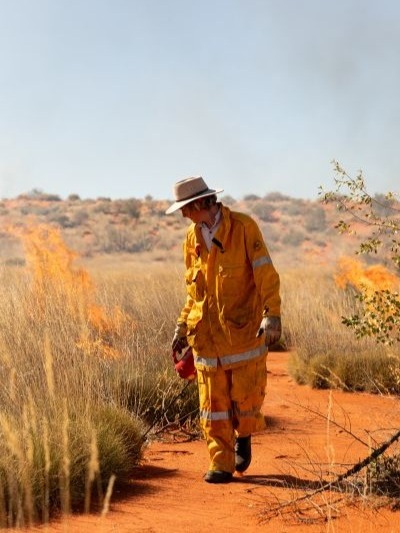
“The generous grant from QBE will fund strategic fire management across two conservation reserves on Wangkamadla Country in the Simpson Desert, which together span 448,500 hectares,” said Rhys Swain, National Fire Program Manager. “With methods such as aerial burning and track grading to create firebreaks, we can reduce the risk of extreme bushfires to protect our vulnerable desert species and preserve important cultural sites.”
Image: Prescribed burns on Bush Heritage Australia's Pilungah Reserve, Queensland, July 2023. Photo by Bee Stephens.
DeadlyScience Ltd
As a leading Indigenous STEM community organisation, DeadlyScience’s mission is to create STEM equity for Aboriginal and Torres Strait Islander students. They provide science resources and education programs to over 800 regional and remote schools.
“We’ll use the grant to support our Deadly Weather initiative, a STEM education program blending First Nations seasonal knowledge with smart weather technology to engage remote Indigenous students in climate science,” said Corey Tutt- Founder & CEO.
Upskilling educators and providing permanent kits, Deadly Weather provides scalable and sustainable program that fosters both educational equity and climate resilience.
Mornington Peninsula and Western Port Biosphere Reserve Foundation
The Mornington Peninsula and Western Port Biosphere Reserve is Victoria’s only UNESCO-listed Biosphere Reserve. The Mornington Peninsula and Western Port Biosphere Foundation is a not-for-profit organisation working with local communities to create a sustainable future for the Western Port region through research, education, partnerships, and conservation.
“Through our Western Port Blue Carbon Community Resilience Project, we’re helping rural landholders adapt to coastal erosion and rising sea levels by offering workshops, landholder consultations, and co-designing nature-based solutions,” said Mel Barker, CEO. “The grant will support this program, as well as our ongoing exploration of how we might be able to leverage blue carbon financial mechanisms as an economic incentive in the region.”
Parklands Albury Wodonga Limited
Parklands Albury Wodonga is a community organisation managing bush parks around Albury-Wodonga focused on conservation, recreation, cultural heritage, and community engagement through on ground practical projects.
“With the grant, we will be able to restore 1.5km of Waterworks Regional Park along the Murray River, installing fencing, planting resilient vegetation, and building boardwalks, in partnership with our First Nations people, Wodonga Mens Shed, local schools and community volunteers,” said Ant Packer, Community Ranger. “The restoration will help to boost biodiversity and improve community health and wellbeing through connection with nature and the river.”
This project will complete one of the last gaps in Project 66 – the 66km conservation corridor along the Murray River between Lake Hume and West Wodonga.
Find out more about the QBE Foundation local grants program.